
 Skip to content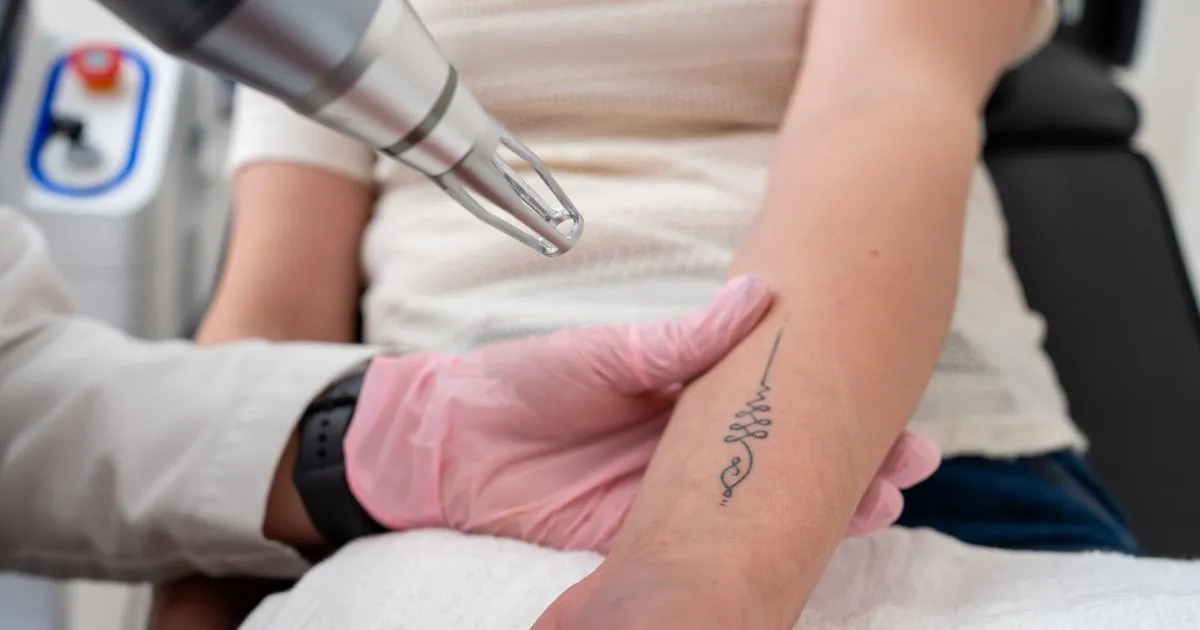
Many people experience tattoo regret, but figuring out how to remove a tattoo can seem confusing. How does light remove ink that’s deep in the skin? Why do some colors fade faster? What happens in your body between treatments?
The answers lie in physics and biology working together in ways most people never learn about. At Kay Dermatology, clients often ask detailed questions about how laser tattoo removal works beyond just “it breaks up the ink.” The real explanation involves wavelengths, particle sizes, immune system responses, and the specific properties of different tattoo pigments.
Understanding the science helps set realistic expectations, explains why removal takes time, and shows why results can vary. Here’s what happens when laser light targets tattoo ink and how your body finishes the removal.
Tattoo removal science starts with a concept called selective photothermolysis. This means certain light wavelengths can target specific ink colors without harming the surrounding skin. Instead of burning the tattoo, the laser uses focused light to break ink particles into smaller pieces.
Here’s how it works: Tattoo ink is placed in the dermis, the deeper layer of skin, as particles too large for your immune system to remove. When you get a tattoo, needles deposit these ink particles deep enough to make them permanent.
The laser sends out very short bursts of concentrated light, measured in nanoseconds or picoseconds. These quick pulses deliver strong energy in a split second. The ink particles absorb this energy and heat up much faster than the skin around them.
This quick rise in temperature makes the ink particles expand and contract so quickly that they break into smaller pieces. It’s like hitting a rock with a hammer, the impact breaks it apart. The laser does this by rapid heating and cooling, not by burning or melting the ink.
The skin around the tattoo doesn’t absorb the laser’s light like the ink does, so it doesn’t get hot enough to be harmed. Because the pulse is so quick, heat doesn’t spread and cause burns. This selectivity allows for safe tattoo removal without scarring or lasting skin damage.
Different tattoo removal lasers use different wavelengths, measured in nanometers. Each wavelength targets certain colors because different pigments absorb different types of light. That’s why choosing the right laser is so important for effective removal.
Older tattoo removal methods used surgery, scraping, or strong chemicals. These methods often led to more scarring and uneven results.
Modern safe tattoo removal methods using lasers offer several advantages. For those seeking laser tattoo treatment explained in detail, these benefits highlight why laser technology is the preferred choice:
For people considering cover-ups, tattoo ink removal technology can also fade existing ink enough to make new designs easier and cleaner.
Laser tattoo removal works for many people, but results depend on several factors.
Good candidates often include individuals who:
The type of tattoo also matters. Black ink fades the fastest, while colors like green or yellow may fade more slowly. Older tattoos usually fade more easily than newer ones because some ink has already broken down over time.
Skin tone is also important, as laser settings are adjusted for safety. Contact Kay Dermatology to talk about how these principles apply to your own tattoo removal goals.
Knowing what happens before, during, and after the laser tattoo removal process can ease a lot of anxiety and help you feel more prepared.
Your provider will look at your tattoo’s size, colors, depth, and location. You might be asked to avoid sun exposure before your sessions to help reduce skin sensitivity.
You’ll wear protective eyewear, and the laser will send short bursts of energy to the tattooed area. Most people say it feels like quick snaps or warmth. Cooling methods are often used to keep you comfortable.
There’s minimal downtime. The treated area might look red, swollen, or a bit gray right after treatment, but these effects usually go away in a few days.
You’ll start to see fading over several weeks. Most tattoos need several sessions, spaced a few weeks apart. The total number of treatments depends on your ink and how your body responds.
Physics limits how much ink can be safely broken up in one session without harming your skin. Using too much energy at once can cause burns or scarring. Your body also needs time to clear away ink fragments before more can be treated. That’s why patience is important.
No. At-home devices don’t have the right wavelengths, pulse durations, or energy levels to break up tattoo ink effectively. They can damage your skin but won’t remove tattoos. Proper laser tattoo removal needs medical-grade equipment and trained professionals.
It’s rare, but it can happen. Some people’s immune systems don’t clear away certain types of ink, even after the ink is broken up. This is unpredictable and not common. Most healthy immune systems remove the ink well if there’s enough time between sessions.
Knowing how laser tattoo removal works explains why patience is important and why results can differ from person to person. The process uses precise physics to break up ink and relies on your body’s biology to remove it. When both work well, tattoos that once seemed permanent can fade a lot or even disappear.
Modern laser technology has improved significantly over the past decade. With better wavelengths, shorter pulses, and a better understanding of how inks respond, today’s treatments are faster and more effective than older methods.
If you’re looking into laser tattoo removal in Burbank, CA, it’s important to choose experienced providers. At Kay Dermatology, we customize treatments with advanced laser systems that target ink and protect your skin.
Book your consultation today and get a science-based assessment of what’s possible for that specific tattoo.
Recent Post