
 Skip to content
Toenail fungus often returns even after it looks like it’s gone, which can be more frustrating than the infection itself. Many people treat it, see some improvement, and then notice discoloration or thickening again months later, unsure why it keeps happening.
At Kay Dermatology in Burbank, CA, our Onychomycosis Treatment is designed to tackle this problem. Instead of only treating what you can see, we look at why toenail fungus comes back, how professional care can help, and what you can do to prevent it in the future.
Why does toenail fungus return, and how can treatment help stop it? Fungal spores can stay in shoes, showers, and nail debris even after the infection seems gone. Topical treatments usually only reach the surface, not the deeper fungus in the nail. Professional care, along with good habits, can lower the chances of it coming back better than treating just the nail.
Fungal spores are resilient. They can persist in a few common places long after the visible infection on the nail itself appears to have cleared up:
This is a big part of why so many patients feel like the fungus “came back” when in reality it may never have been fully eliminated from the surrounding environment. Topical treatments also have a real limitation worth understanding. They tend to work on the surface of the nail, while the fungus causing recurring toenail fungus often sits embedded deeper in the nail bed, out of reach of a cream or polish applied externally. None of this means treatment does not work. It means recurrence is tied to specific, identifiable reasons, not a sign that fungal infections are simply untreatable.
At Kay Dermatology, treatment options for onychomycosis include oral medications, topical solutions, and advanced laser therapy, with the right approach depending on the severity and specifics of each case. Laser therapy in particular is designed to reach the fungus more thoroughly than a topical product applied to the nail’s surface alone, targeting the fungal cells responsible for the infection.
This approach tackles one of the main reasons fungal infections come back. Treating the fungus thoroughly, not just what you see on the surface, can help prevent it from returning. During your consultation, your provider will decide which mix of oral, topical, or laser treatments is best for you.
Even with good treatment, reinfection can happen if the sources of fungus are still around. Shoes, shower floors, and shared nail tools can all bring fungal spores back to nails that have already cleared up.
A few practical habits make a real difference alongside treatment:
Using professional treatment along with these habits gives you the best chance for long-term results. Relying on treatment alone often isn’t enough because the environment plays a big role in recurring infections.
Visible improvement takes time, since a healthy, clear nail has to grow out to replace the infected one, following the nail’s natural growth cycle. This process generally unfolds over several months rather than weeks, and it is one of the more patience-testing aspects of treating fungal nail infection causes at their source.
Many patients see meaningful improvement in healthy nail regrowth as treatment progresses, though results and recurrence risk vary based on a few factors:
It’s important to be honest: no treatment, not even laser therapy, can promise the fungus will never come back. Reinfection is common with this condition, no matter which method you use.
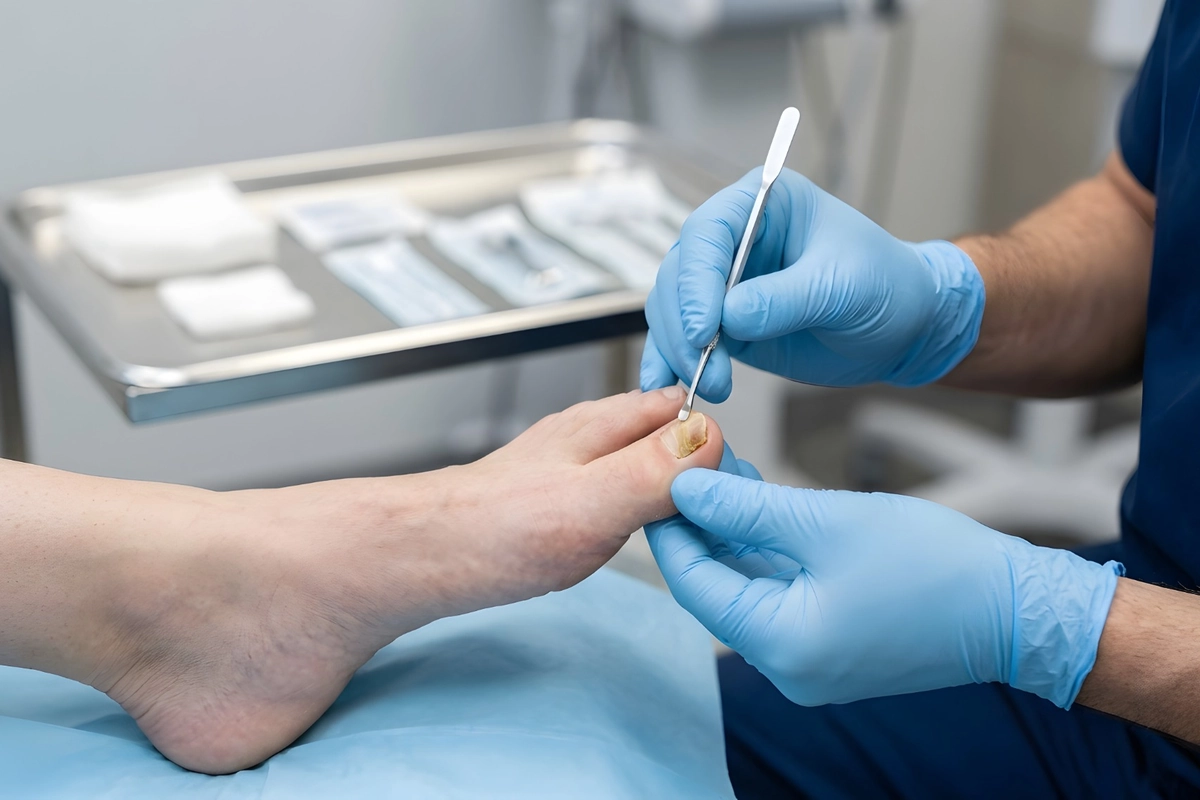
Treatment begins with an in-depth consultation, where a provider examines the affected nails, reviews medical history, and determines the most appropriate approach, whether that means oral medication, topical solutions, laser therapy, or some combination. Most treatment options are minimally invasive and well tolerated, with little to no downtime involved.
A few preparation and aftercare steps support the process:
Your provider will decide how many sessions you need and how long treatment will take, depending on how severe your infection is. This can be different for each person.
Patients with discolored, thickened, or brittle nails caused by fungal infection, especially those who have tried over-the-counter products without lasting success, tend to be strong candidates for professional nail discoloration and fungal treatment. This is particularly true for patients dealing with persistent or recurring infections despite previous treatment attempts.
If you have health conditions like diabetes or circulation problems, talk to your provider first, as these can affect how your nails heal and what treatment is best. Your provider will also make sure your nail problem is really a fungal infection before starting treatment.
People who pair thorough treatment with good preventive habits usually have the best chance of keeping their nails clear and healthy. This means treating the infection and also dealing with things like shoes and shared tools that can bring the fungus back.
None of this guarantees fungus will never return, and outcomes depend on the individual factors already covered here. For many patients working through toe fungus prevention tips alongside professional care, that combined approach is what finally breaks the cycle of recurring infection.
If toenail fungus keeps returning no matter what you try, a consultation is the clearest way to find out which treatment approach fits your specific case. The team at Kay Dermatology can evaluate your nails and build a plan for nail fungus Care in Burbank, CA, that addresses both treatment and prevention.
Contact us to get started, and our team will help you find the right path forward. Book your Onychomycosis Treatment session today!
Recent Post